STEEL BALL RUN: JoJo's Bizarre Adventure, What Did You Think of Episode 5 This Time?
--
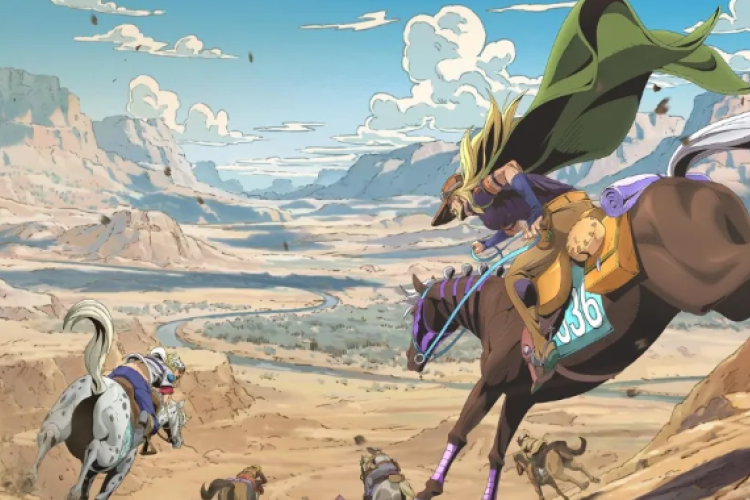
ASTON OTONITY – Oh my God, I’m so glad my dad is cool and supportive, and I don’t have to deal with this patriarchal nonsense. The fifth episode of *JoJo’s Bizarre Adventure: Steel Ball Run* reveals Gyro’s backstory and highlights his motivations all at once, rather than spreading them out across other storylines as in the manga.
With this episode, the thematic core of *Steel Ball Run*—and the heart of what makes it the best part of one of the most influential manga and anime ever created—is revealed, and I can’t wait to see the anime delve deeper into these themes over the next few episodes as it heads toward the finish line.
After discovering the Zombie Horse—a magical object that allows Gyro and Johnny to recover from the various life-threatening injuries they’ve suffered and will continue to face—the anime shifts to Gyro’s childhood.
Here we learn that his father, a doctor, is also the King of Naples’s executioner—a role the Zepelli family has held for hundreds of years—and that the Steel Ball was originally a tool used in the execution process. Gyro is set to take over his father’s position when he turns twenty-five.
In short, Gyro has a socially respected life laid out before him and is likely to achieve great success—or at least he would, were it not for a young boy, Marco, who works dutifully and innocently for a rebel baron and is not destined to be the first to wield his sword.
Gyro’s backstory is one of the best parts of the early *Steel Ball Run* manga, and the anime makes Gyro’s character shine even brighter by clarifying how he was forced to emulate his father.
This episode was the first time I realized that teenage Gyro essentially had the same hairstyle as his father, and between that and the fact that he was dressed almost exactly like his father in most of these flashbacks, it’s very clear how Gyro was forced into a patriarchal model of masculinity that didn’t suit him and ultimately wouldn’t work out for him.
Read more: Mobile MMORPG CABAL: Revolution Announces Simultaneous CBT on November 5!
This idea of unsatisfying patriarchal norms and expectations is even hinted at by Gyro’s father—the very person who passed this trauma down to Gyro—when he reveals that this way of life ultimately left him alienated and a slave to the social position he inherited from his own father.
Although we catch a glimpse of rebellion in the young Gyro—such as when he playfully bites his father’s arm to make him drop a steel ball the size of a small child—Gyro’s rejection of his father and his participation in the Steel Ball Run to save a child—who is also merely fulfilling a duty inherited from his own father—are deeply moving.
This episode makes it clear that *Steel Ball Run* is ultimately about Gyro’s journey (and Johnny’s, but we’ll get to that a bit later) to prove that he deserves his father’s respect on his own terms—and to set aside his need for his father’s affection if his father cannot meet that need within the life and values Gyro has chosen for himself—and that’s brilliant.
Now, every challenge the two face in this bizarre adventure represents just how difficult it is for young men to surpass their fathers in real life—a process so physically and emotionally exhausting that many never even begin the work required to achieve it.